

Imagine walking into a cave and being greeted by stunning formations reaching up like nature’s stalwart sculptures. Stalagmites are not just rock formations: they are nature’s hidden marvels waiting to be discovered. They form slowly, over thousands of years, but once you notice them, you can’t help but be captivated by their beauty. These geological wonders are a testament to the Earth’s artistic abilities and its slow, yet deliberate, processes. Ready to jump into the intriguing realm of stalagmites? Let’s explore.
What Are Stalagmites?
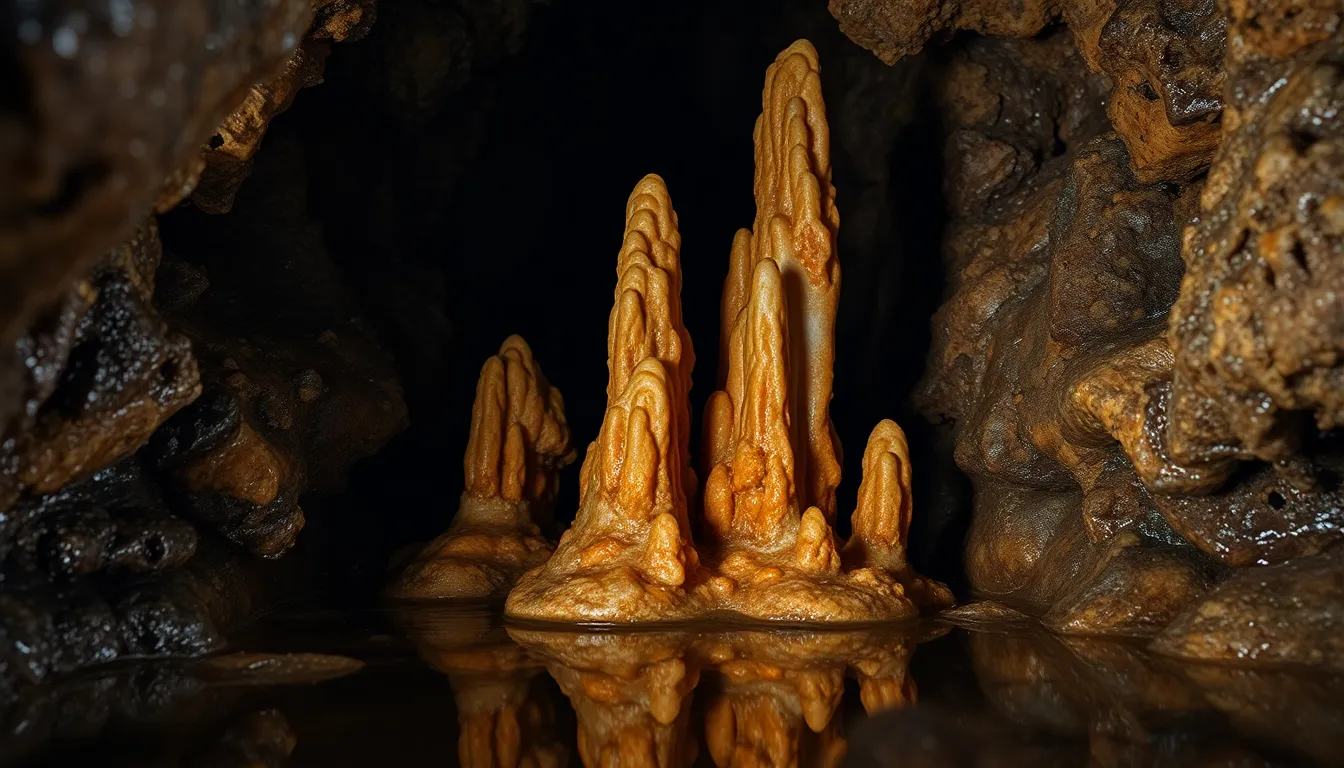
Stalagmites are mineral formations that rise from the floor of caves. They often develop along with their counterparts, stalactites, which hang from the ceilings. When mineral-rich water drips through cave ceilings, it leaves behind deposits that accumulate over time. Unlike stalactites, which hang due to gravity, stalagmites grow upward, showcasing nature’s artistic touch. These structures can vary significantly in size, shape, and color, depending on the minerals present and the conditions of their environment.
Formation Process of Stalagmites
The formation of stalagmites is a beautifully intricate process. It begins with precipitation from mineral-rich water that seeps through the rocks above. As this water drips down and evaporates, minerals such as calcium carbonate are left behind, layer by layer. Each drop contributes a tiny bit to the stalagmite’s growth. Over centuries, these seemingly insignificant drips can lead to stunning formations. You might not realize it, but some stalagmites are known to grow only a few centimeters every thousand years. Factors such as temperature, humidity, and the mineral content in the water all play crucial roles in how quickly a stalagmite forms.
Types of Stalagmites
There’s no one-size-fits-all when it comes to stalagmites: they come in various shapes and sizes. For instance:
- Column Stalagmites: These are tall and cylindrical, resembling massive pillars in a cathedral.
- Drapery Stalagmites: These have a flowing or curtain-like appearance, often forming in areas with a high drip rate.
- Bump Stalagmites: Small and rounded, these quirky shapes can look like little mushrooms poking out from the ground.
- Cave Bacon: Not actually bacon, but these formations resemble strips of bacon stacked closely together.
Each type presents unique characteristics and beauty, reminding us that nature thrives on creativity.
Ecological Significance of Stalagmites
Stalagmites might be mesmerizing to look at, but they also play vital roles within their ecosystems. By documenting mineral deposits over thousands of years, they serve as valuable records of past climate conditions. Scientists study these formations to gather information about the environment and climate changes, helping to track natural phenomena over millennia. Besides, stalagmites support unique ecosystems. They provide habitats for various microorganisms, fungi, and even some insects, so contributing to the complex web of cave biodiversity.
Exploring Famous Stalagmite Locations
Adventure seekers and geology enthusiasts alike will find numerous stunning locations boasting remarkable stalagmites.
- Carlsbad Caverns (USA): Known for its vast chambers and impressive formations, Carlsbad is a must-visit for stalagmite enthusiasts.
- Waitomo Glowworm Caves (New Zealand): Not only do these caves feature fascinating stalagmites, but they also glow with bioluminescent worms, creating a magical atmosphere.
- Postojna Cave (Slovenia): This cave is renowned for its stunning stalagmites and stalactites, with some formations dating back to the Ice Age.
- Xe Bang Fai Cave (Laos): Home to some of the largest stalagmites in the world, this cave offers a spectacular experience for those brave enough to explore it.
Stalagmites in Culture and History
Throughout history, stalagmites have intrigued humankind. Ancient cultures often regarded them with reverence, believing they harbored supernatural powers or were sacred spaces. Notably, the formation of stalagmites has influenced folklore and myths in various societies. Artists and writers have drawn inspiration from their otherworldly beauty as well. Modern science now extends its interest into these formations, aiming to unravel the mysteries they might hold about Earth’s past and the evolution of cave ecosystems. Inspired by their unique forms, contemporary artists have incorporated stalagmites into art pieces, reflecting our interconnectedness with nature.


